
Basal Cell Carcinoma: Symptoms, Causes, and Non-Surgical Treatment Options
Apr 22, 2026
Basal cell carcinoma (BCC) is the most common form of skin cancer—and fortunately, also one of the most treatable when caught early. Despite its prevalence, BCC doesn’t always look the same, which can make it easy to overlook. Understanding its many forms and the range of treatment options available is key to protecting your skin health.
What Is Basal Cell Carcinoma?
Basal cell carcinoma arises from the basal cells in the epidermis, often as a result of cumulative sun exposure. It typically develops on sun-exposed areas such as the face, ears, neck, scalp, and shoulders. While BCC rarely spreads to distant organs, it can grow locally and cause significant tissue damage if left untreated.
How BCC Can Appear
One of the challenges with BCC is its variability. It doesn’t always present as a classic “skin cancer” lesion, and symptoms can differ from person to person. Some common appearances include:
- A pearly or waxy bump, often with visible blood vessels
- A flat, flesh-colored or brown scar-like lesion
- A sore that bleeds, scabs, heals, and then returns
- A pink or reddish patch that may itch or be slightly tender
- A shiny nodule, particularly on the face
- A lesion with a rolled border and central indentation
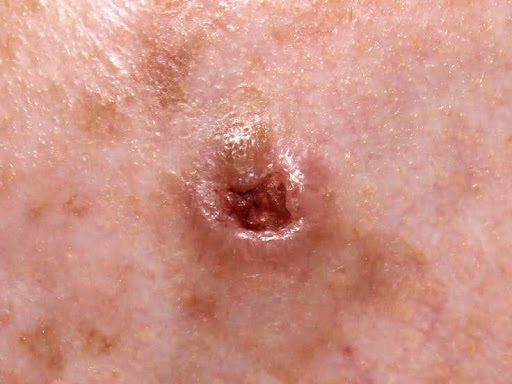
Because these features can mimic benign skin conditions—like eczema, psoriasis, or minor injuries—many patients delay seeking care.
Why Early Diagnosis Matters
Although BCC grows slowly, it can become more invasive over time. Left untreated, it may penetrate deeper layers of skin and even affect underlying structures such as muscle or bone. Early diagnosis allows for simpler, less invasive treatment and better cosmetic outcomes.
If you notice a spot that doesn’t heal, changes in appearance, or behaves differently than other areas of your skin, it’s worth having it evaluated by a dermatologist.
Treatment Options for BCC
Treatment depends on the size, depth, and location of the lesion, as well as patient-specific factors. Common options include:
- Surgical excision: Removing the cancer along with a margin of healthy tissue
- Mohs surgery: A precise, tissue-sparing technique often used for facial lesions
- Cryotherapy: Freezing the lesion with liquid nitrogen
- Topical medications: For superficial cases
- Curettage and electrodessication: Scraping and cauterizing the lesion

A Newer, Non-Surgical Option: Superficial Radiation Therapy
An increasingly popular option—especially for patients who want to avoid surgery—is superficial radiation therapy (SRT). This non-invasive treatment uses low-energy X-rays to target and destroy cancer cells just beneath the skin’s surface.
SRT is particularly well-suited for:
- Patients who are not ideal surgical candidates
- Lesions in cosmetically sensitive areas (such as the face)
- Individuals seeking a painless, scar-minimizing approach
Treatments are typically quick, require no anesthesia, and involve little to no downtime. Over a series of sessions, the radiation precisely treats the lesion while preserving surrounding healthy tissue.
Local Expertise in Dallas and Las Colinas
For patients in the Dallas and Las Colinas areas, Dr. Ellen Turner offers extensive experience in treating basal cell carcinoma using superficial radiation therapy. She has been utilizing this advanced modality for over a decade, combining cutting-edge treatment with a patient-centered approach.
Her practice focuses not only on effective cancer treatment with 99% cure rates, but also on achieving optimal cosmetic outcomes and ensuring patient comfort throughout the process.
Takeaway
Basal cell carcinoma may be common, but it should never be ignored. Its many forms can make it easy to miss, which is why awareness is so important. The good news is that with early detection and the growing range of treatment options—including non-surgical approaches like superficial radiation therapy—patients have more choices than ever before.
If you have a concerning skin lesion or simply want a professional skin evaluation, seeking care from an experienced dermatologist can make all the difference.
Contact the Dermatology Office at 214-373-7546 or www.dermofficedallas.com to learn more about how to treat a possible basal cell carcinoma.
Stay connected with news and updates!
Join our mailing list to receive the latest news and updates from our team.
Don't worry, your information will not be shared.
We hate SPAM. We will never sell your information, for any reason.
